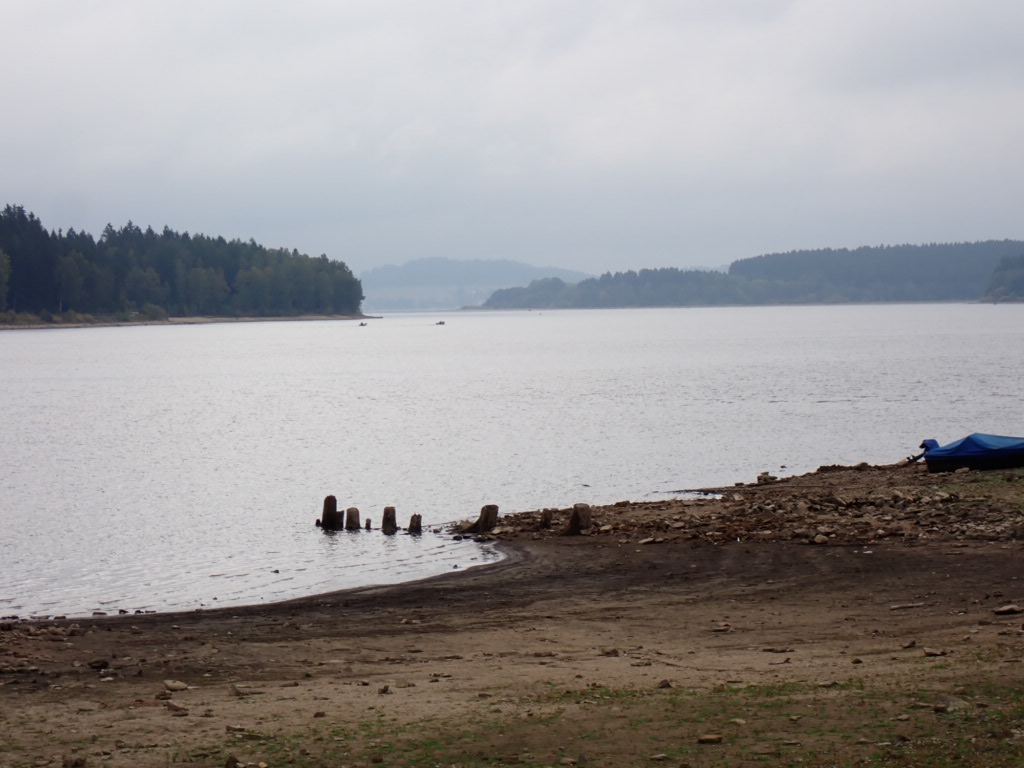
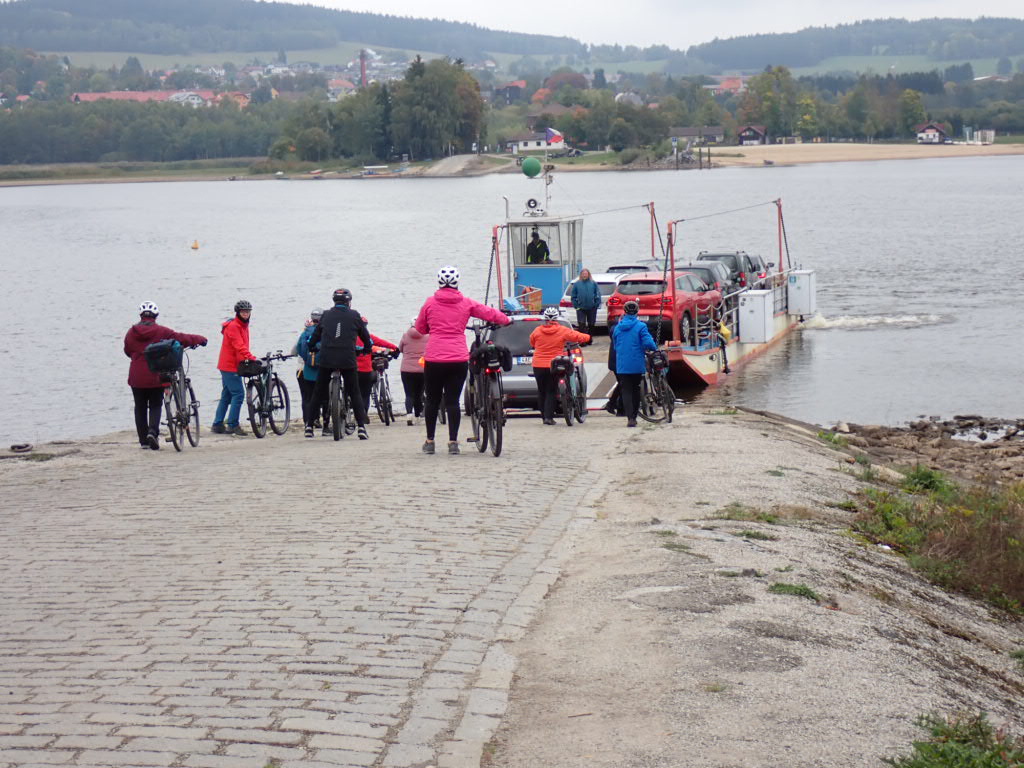
After spending the night at Horni Plana, we cycled down to the ‘beach’. In the 1950s the Vltava became a huge reservoir here- the largest area of water in the Czech Republic. So Horni Plane would have been high up the side of the Vltava valley but is these days on the banks of the Lipno Reservoir. It was billed as the solution to flooding further down the river and also enabled the construction of a hydroelectric plant. So the first thing we did that day was to cross the Vltava to the other side by boat.
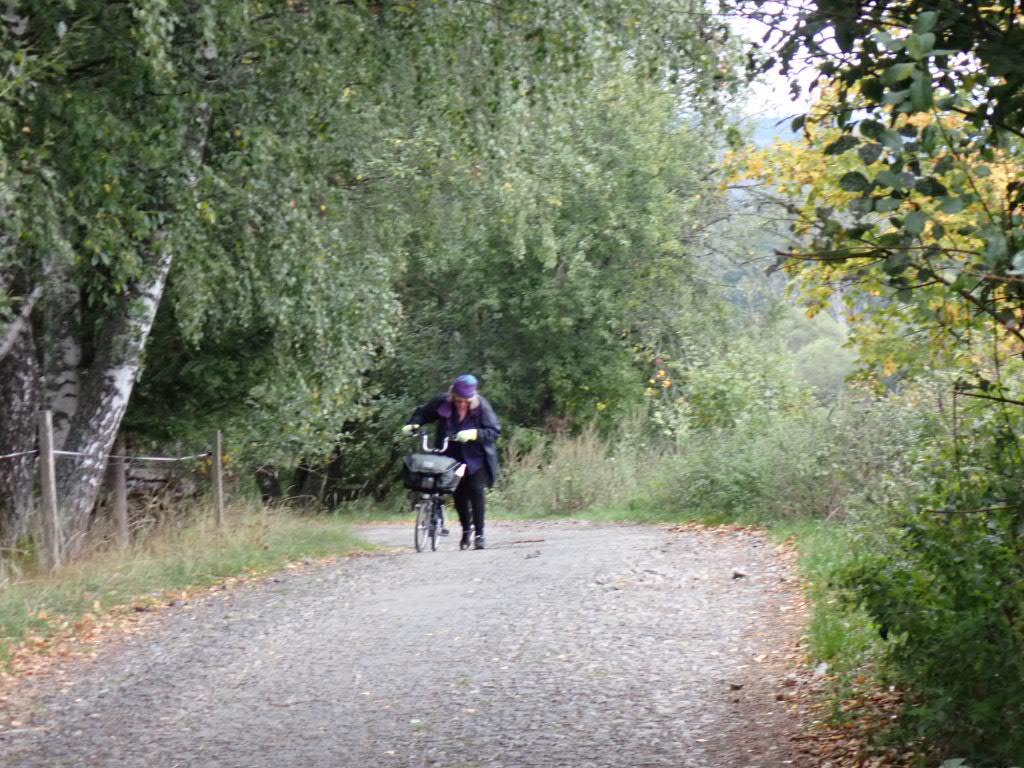
And then we entered the rather strange world that is on the southern side of the river. At times it reminded me of a bit of scenery from Little Red Riding Hood or Goldilocks and the Three Bears. You would think at any moment a woodcutter would come striding out of the deep, dark forest – and, in fact, most of the very few signs of life were lorries carrying logs away from the area. The rest of the time if I wanted to communicate, it was Rob or the cows. I asked Rob why he had not taken photos of the deep, dark forest? ‘Because it was deep and dark,’ he replied.
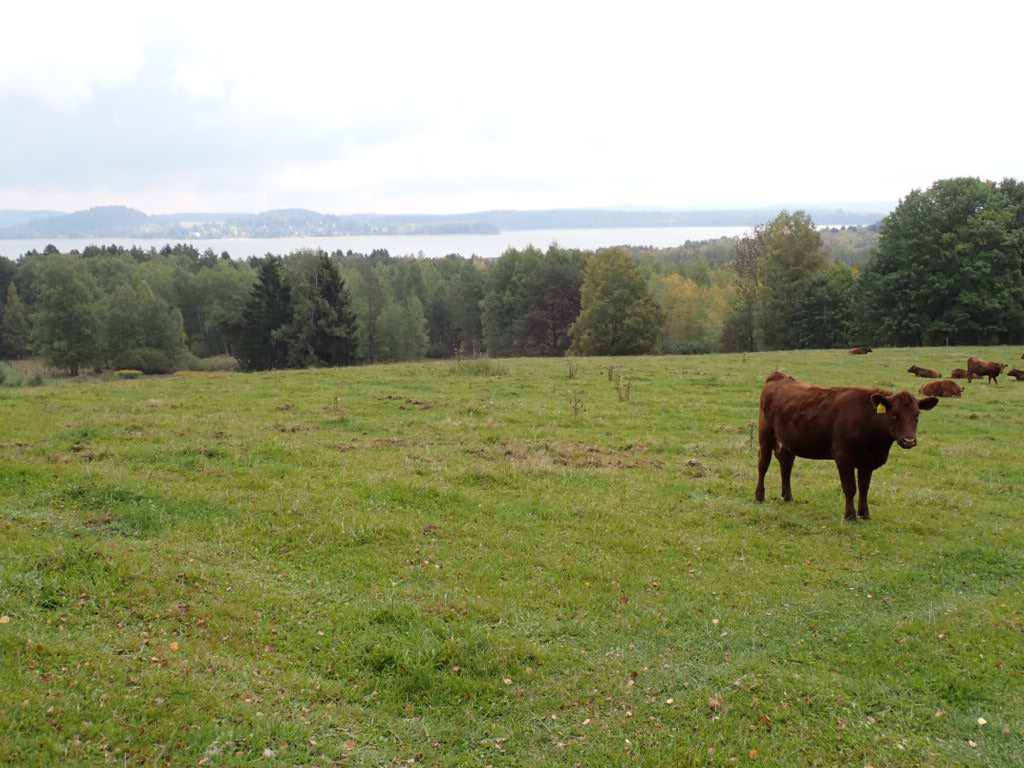
But in conversing with Rob, a thing we do now and then, he was a mine of information about the area. As we looked over the fields he informed me that we were looking into Austria and, of course, this area between the river and the border was only for the military in the Communist era. Left to itself, the area was a haven for wildlife and trees. Although it is farmed today, there was very little sign of habitation.
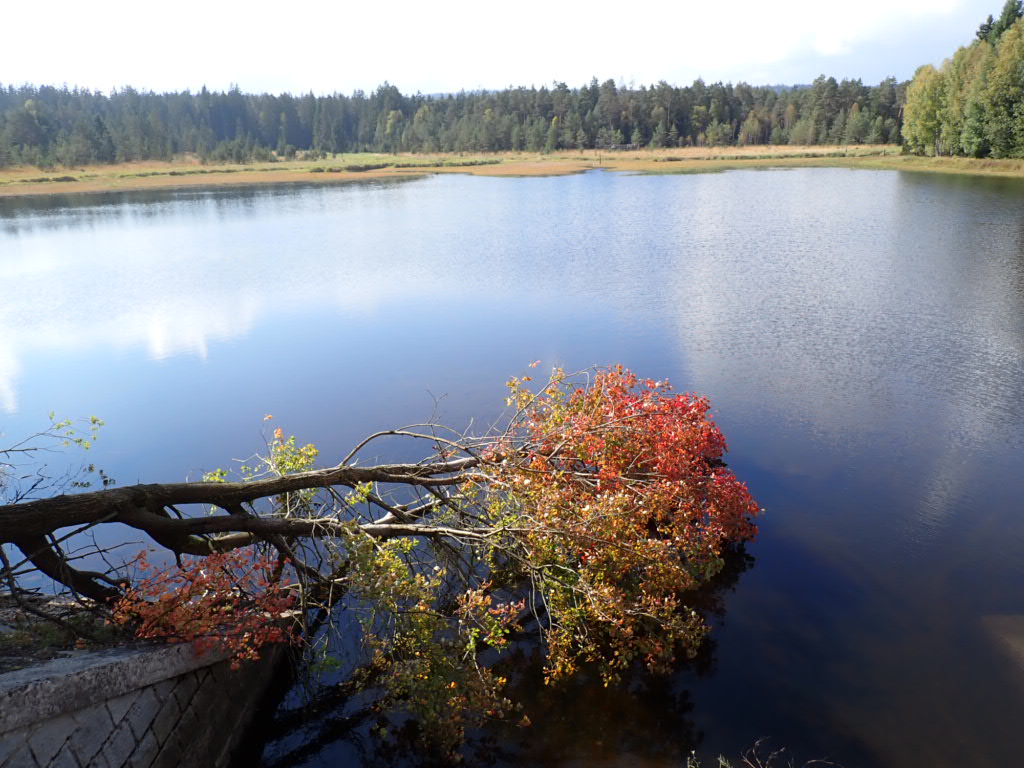
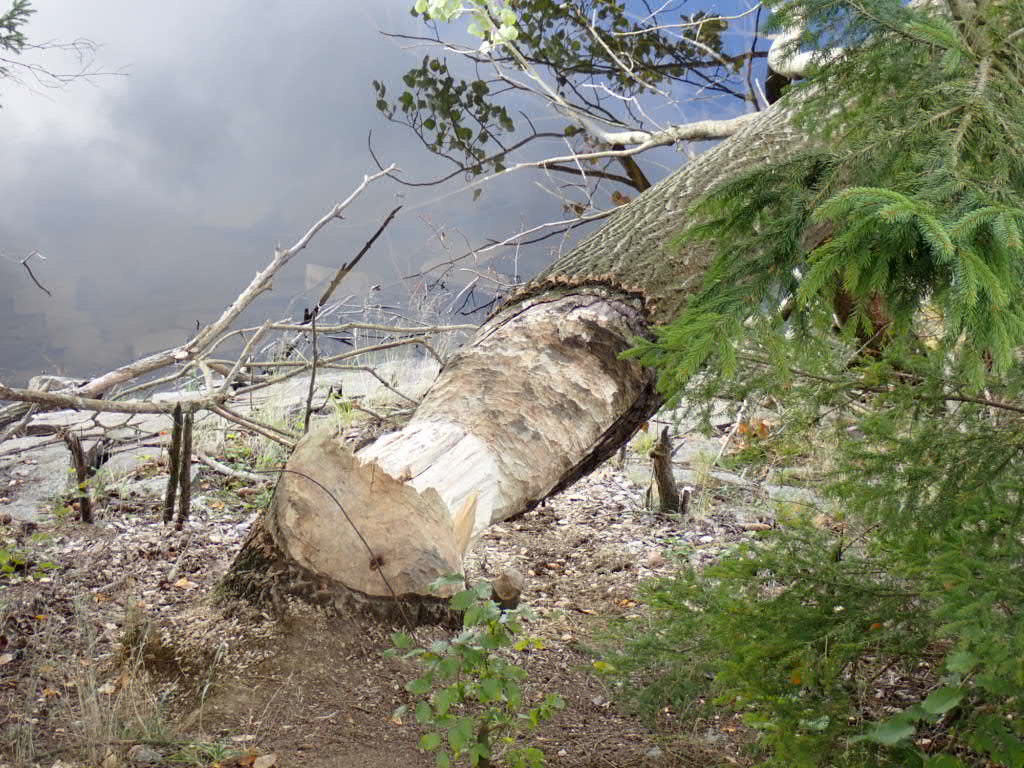
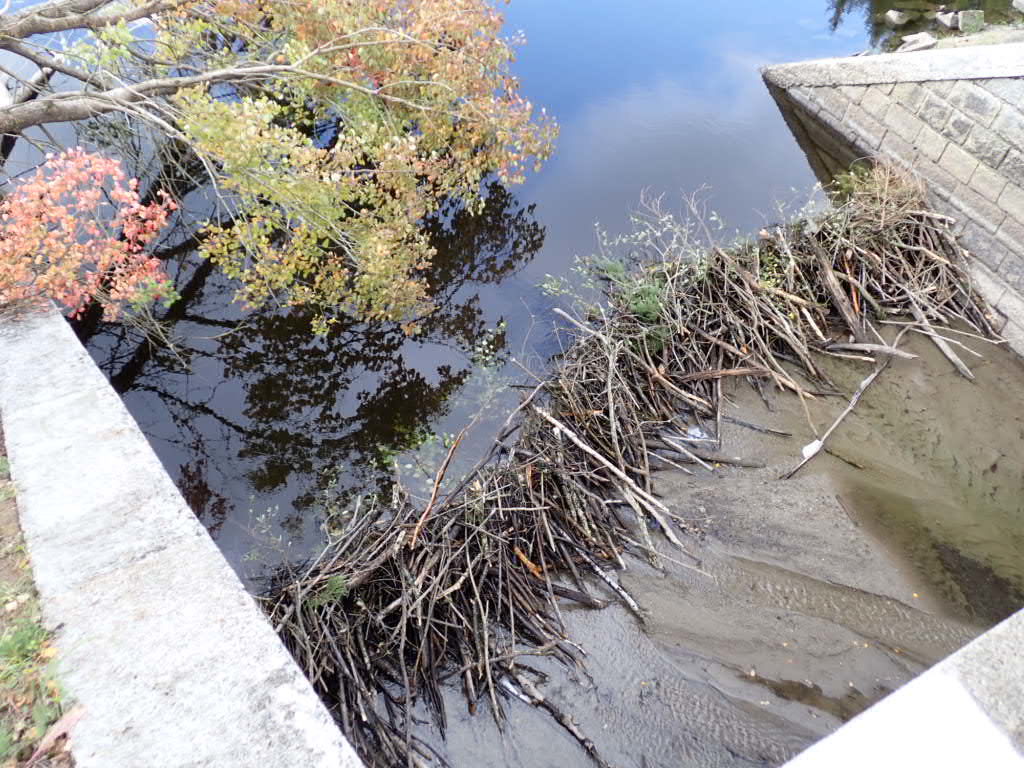
Our lunch stop was standing up on a bridge across a little part of the reservoir, where beavers had been at work – the fallen tree in this photo had been brought down by beavers gnawing right through the trunk- with Austria in the background.
But all is not right in this seemingly rural idyll. There are now few jobs in the region that don’t involve tourism but tourism is affecting the environment in a very damaging way. New recreation resorts and housing, which are turning into ghost towns out of season, are sending water that is not sufficiently treated into the lake. Helped also by the warmer temperatures brought about by climate change, blue algae is blooming and threatening the very tourism that promotes it. There are more tourist beds than residents in the area and a more sustainable future is being sought.
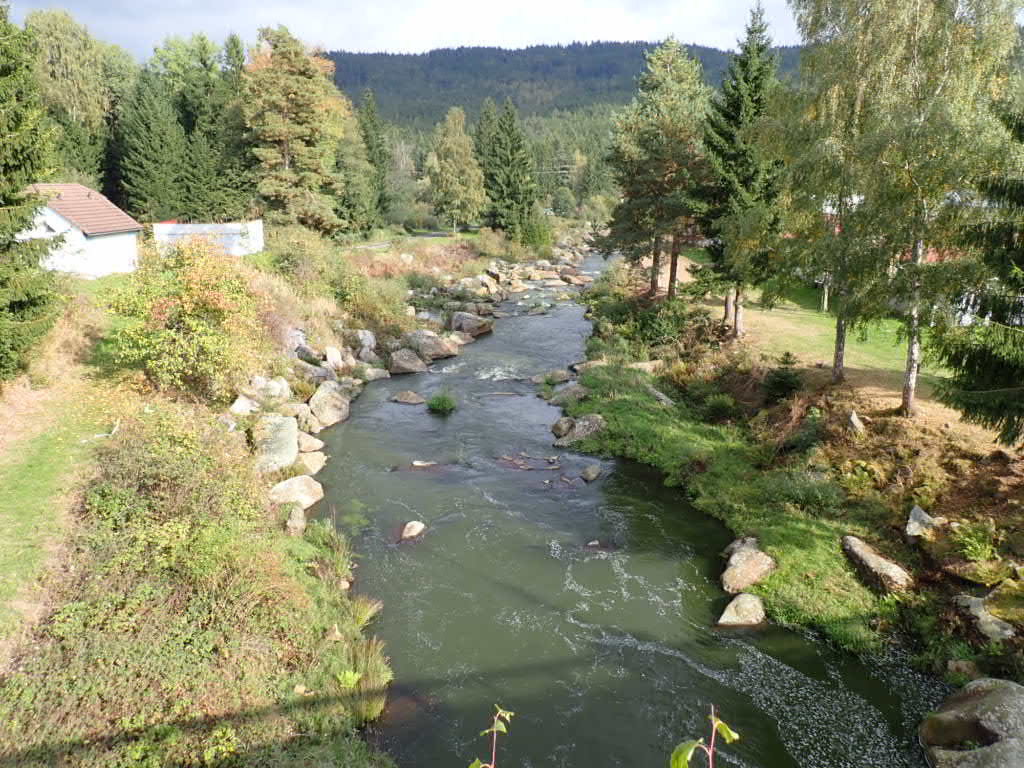
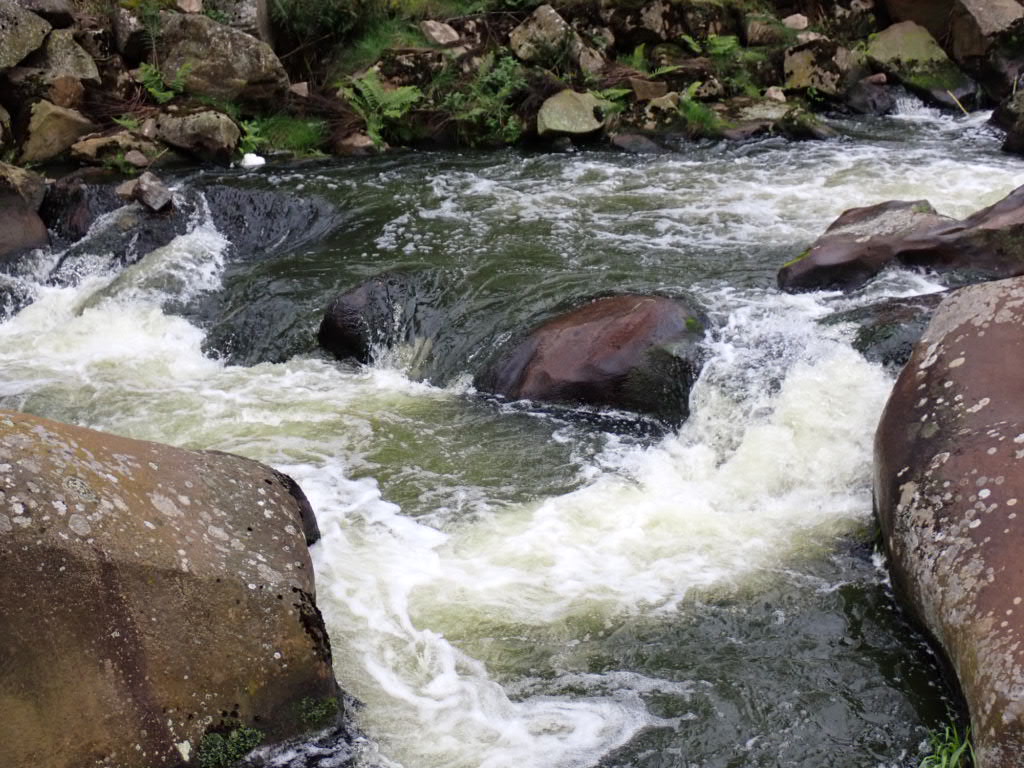
I had a moment of emotion after walking over the massive dam and looking over the other side to see the Vltava appearing in a more recognisable form and becoming again the river of Smetana’s music.
 Claire on the Move
Leave a comment