When we couldn’t find the source of the Vltava River, the natural thing was to check out Ellen’s project on Google Earth. My daughter, a second year Geography student, is working through a true labour of love as part of my 60th birthday present. Her project has involved mapping the first part of the river on Google Earth with lots of interesting places to check.. We hadn’t quite thought how in the middle of nowhere we were though and had no data to use. So we just kept going on in faith.
And round the corner, there it was. So small and inconspicuous but for a few picnic tables and a very helpful info board – in Czech. Down a few wooden steps to Pramen Vltavy and this is what you see:
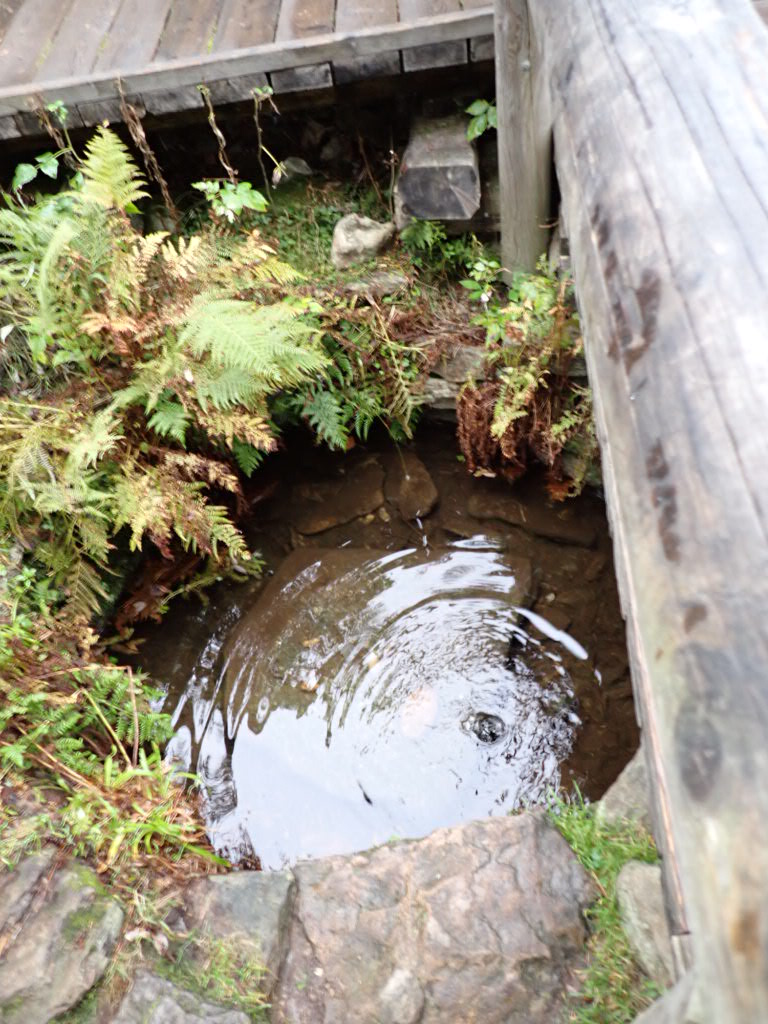
This really doesn’t do it justice. You have to listen to to the first two seconds of Smetana’s Vltava https://m.youtube.com/watch?v=AvdJx4y5omg and you will hear that little ‘pop’ as a bubble comes out the ground. For those with me on Facebook I have posted a video there. Haven’t purchased WordPress Premium yet to allow me to do that here!
So why did Smetana’s story of this river in music become such a classic? This is one of 6 ‘poems’ that Smetana wrote towards the end of his life. Before these he hadn’t risen to fame in his country that was part of the Austro-Hungarian Empire, partly because his liking for the music of the German composer, Wagner, was out of step with the sympathies of the time. Taking his inspiration at this time from the Hungarian composer, Liszt, allowed him the freedom to write these six poems in a narrative style. It is absolutely incredible that Smetana had lost his hearing when he was writing ‘Vltava’. I had a big think about this because I hear music in my head nearly all the time – sometimes just a phrase or a theme, endlessly – which can drive me mad (and others, if I forget and what is in my head comes out), but I just hear a single line – a part or a melody. I can read music fairly easily but reading a musical score and hearing how all the parts would sound when played together – that’s another thing totally. It’s odd that excerpts from Chopin are more in my head this week (must change that somehow). So Smetana must have been able to ‘hear’ how his composition was going to sound, when he never had the joy of hearing it played to its first audience.
The Vltava was first performed in 1874, a celebration of the longest Czech river and the countryside through which it passes. Intensely nationalistic (Smetana had been part of the failed uprising against the Austro-Hungarian empire in 1848) Smetana had found a musical language that was distinctly Czech and appealed to those that wanted national self determination free of the current rulers. All the 6 works in this collection were first performed together as ‘Ma Vlast’ (‘My Homeland’) in Prague in 1882.
When the Nazis occupied Czechoslovakia, Ma Vlast was banned from being performed but now the work is performed annually in Prague on the anniversary of Smetana’s death on the 12th May.
Seeing where the water that feeds into the great river rises was definitely the highlight but there are many other tributaries that feed the Vltava. This is the longest.
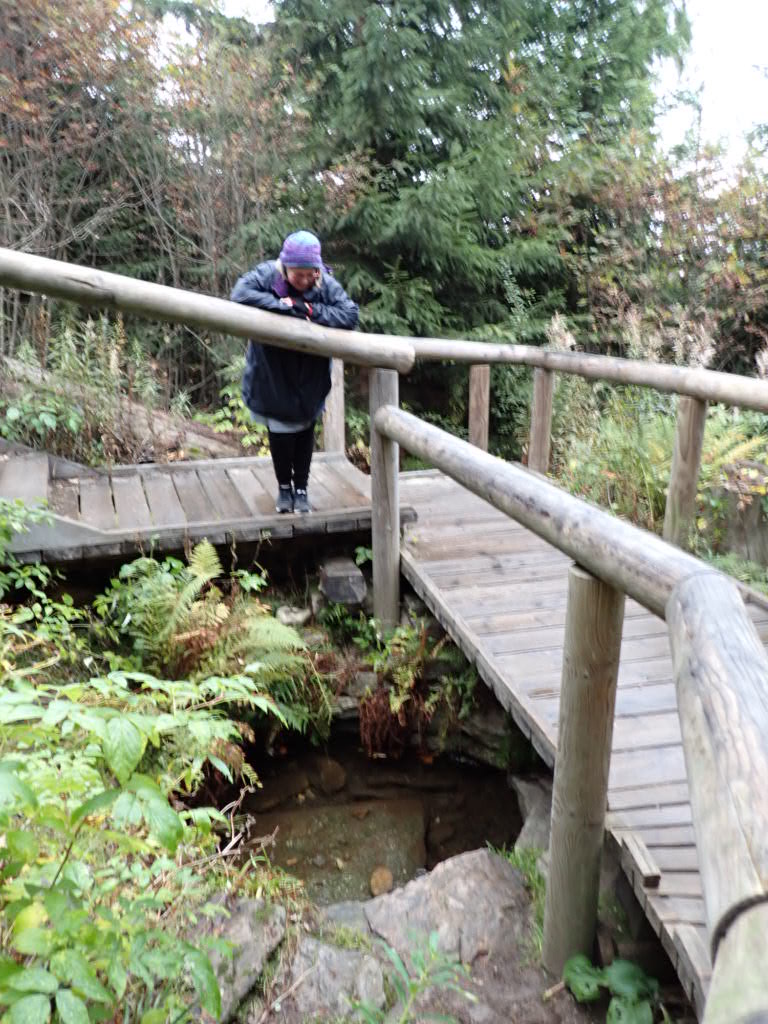
And after that, it was blissfully downhill all the way to Kvilda, where we stayed the first night.
I relied heavily on https://www.classical-music.com/features/works/ma-vlast to find out a bit more background on ‘Ma Vlast’. An interesting read.
 Claire on the Move
Leave a comment